zum Inhalt
  • Galerie und Kulturzentrum in Weimar
  • So–Do 12–18, Fr–Sa 12–20
  • +49 3643 851261

International Studio Program

On the International Studio Program

The International Studio Program of ACC Galerie and the City of Weimar was established in 1994. The city of Weimar, as co-initiator and partner of the International Studio Program, pursues the goal of linking the promotion of artists and the presentation of contemporary art in the urban space, acting as a meeting place and forum for female artists, and attracting international attention. In this way, international cultural exchange is to be promoted and prejudices dismantled.

The city of Weimar supports the program by providing, among other things, a studio with an attached apartment in the Städtisches Atelierhaus Weimar - one of the oldest buildings of its kind in Germany. It houses 11 studios that are rented out to artists* for limited periods of time.

The International Studio Program is supported by the Thuringian State Chancellery.

The city of Weimar finances 750 euros of the monthly stipend, the ACC Galerie Weimar finances 350 euros of the monthly stipend. The monthly stipend is 1,100 euros.

The ACC Galerie Weimar organizes the worldwide application procedure, convenes the independent jury, and supports the artists throughout the year.

The 91 participants of the program come from Argentina, Egypt, Australia, Canada, Chile, China, Colombia, Croatia, Cuba, Belgium, Finland, Germany, Great Britain, Greece, Guatemala, Iran, Iraq, Ireland, Israel, Italy, Japan, Mexico, Nepal, The Netherlands, North Macedonia, Norway, Pakistan, Peru, Poland, Portugal, Russia, Serbia, Slovenia, Spain, Sweden, Switzerland, Turkey, Uruguay, the United States, and Zimbabwe.

Contact:

Knut Birkholz

E-mail: studioprogram@acc-weimar.de
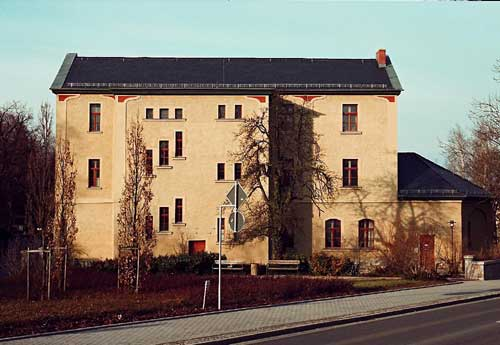
Open Call: 32nd International Studio Program of the ACC Galerie Weimar and the City of Weimar

OPEN CALL


All These Moments – The Future of Artistic Storytelling


I've seen things you people wouldn't believe. Attack ships on fire off (the) shoulder of Orion. I watched C-beams glitter in the dark near the Tannhäuser Gate. All those moments will be lost in time, like tears in rain. Time to die.*


 * https://en.wikipedia.org/wiki/Tears_in_rain_monologue


In Ridley Scott's film Blade Runner, Decker, being close to death, is not only saved in a humanitarian act by the Replicant Batty. Batty's final monologue is also an act of transmission: after all their pursuit and struggle, transience does not have the last word. Despite his reticence, Decker is a listener; what Batty is able to say at the end of his own short life creates a moment beyond hostility. Part of what Batty saw had to be passed on—and Decker becomes the bearer of this memory. 

Inspired by this, the 32nd International Studio Program of the ACC Galerie and the City of Weimar returns to the old concept of narrare humanum est: we ask what current forms of artistic storytelling exist and which are needed in the spaces of memory? How do we relate to all these moments that are constantly lost in time and with time? How do we choose from so many experiences to preserve that which is lasting and significant? How important to us are authenticity, realism, and truthfulness in storytelling in times of fake news, alternative facts, AI, violence, invasion, and war?


The International Studio Program is looking for compelling project proposals from visual artists from around the world that address these questions. We welcome experimental forms that embrace Weimar as a place of remembrance—in a good sense as in art and high culture as well as in the bad sense of experiences like the Nazi era. Under consideration are also the small stories of “everyday” life.

upcoming and previous programs:

Atelierhaus - Städtisches Atelierhaus Weimar, Vorderansicht/Süden,, Bild: Claus Bach
Atelierhaus - Städtisches Atelierhaus Weimar, Rückansicht vom Garten des Atelierhauses/Norden, Bild: Claus Bach
Atelierhaus - Appartement: Wohn-/Schlafraum, Bild: Claus Bach
Atelierhaus - Appartement: Küche, Bild: Claus Bach
Atelierhaus - Atelier, neben dem Appartement, Bild: Claus Bach
Atelierhaus, Bild: Claus Bach
Atelierhaus - Appartement: Eingang, Blick in Küche (rechts) und Wohn-/Schlafraum (links), Bild: Claus Bach

Former participants' statements

For me the stay at the ACC as a resident artist was a deeply enriching experience. It was firstly because of the city of Weimar itself and its friendly, helpful residents. Secondly, because of the century-old studio house full of its welcoming and exciting artists and a beautiful garden. And most importantly, because of the continuous support provided by the ACC team. They were a phone call or email away whenever I needed advice or help with things, sometimes even beyond what would be expected of any institution, and yet they allowed me the freedom and the space to do whatever I liked which included extending my residency, helping with the moving of things and off-time for my trips for academic or artistic purposes. I believe the work I did here has actually helped transform my practice.
Kurchi Dasgupta, India/Nepal

Weimar holds the key to understanding exactly how the past will constantly present the future. I was personally unaware upon applying for this residency program that many of the designs styles that have influenced the world had its origin here in this small and charming town. The studio space was perfect for accumulating and cultivating my ideas, but it was the rich and vibrant multicultural artist and student population that made me feel comfortable in exploring my ideas.
I can say also that despite my language barrier i was very well embraced by the creative artist community in Weimar and i believe that in some way the spirit of Weimar that predates all of us still exists untouched until today. A place for artists to gather and explore the ideas that will personally and globally push things forward.
Matthew McCarthy, Jamaica

I never had a studio of my own (except when on residency), and really I did not even thought I needed it. The spatial conditions in Weimar were more than adequate, even more that I felt I needed, having a really big, spacious and northern light exposed studio that could be adjusted as one needs. I was not really using it and for a month or so, I even gave the studio to the resident who was there before me and who stayed in the Germany and felt he needed to finish the work he started here, I thought it is a solidarity thing to do and share. After he left, and after a month or so not in the studio and using only the apartment which for me was often really cold, I gave the studio a second chance, and this time I really enjoyed that space. Even though I was not using it to the maximum of its potential, as that is the character of my artistic practice, that I do not need a lot of space,  as I was photographing outside, and I could not really print photos in the studio, the studio became more of a living space, reading room, a drawing room. I am very happy that after a long break from drawing, I began drawing again, on a table in the studio I was drawing ants and bees, inspired by a book that I was reading while there – Peter Kropotkin’s “Mutual Aid: A Factor of Evolution”. The big house was generally quite quiet and although all studios were occupied I did not really had much interaction with the other studio artists. I guess that is me, someone else, more extrovert would probably have a totally different experience. I was never lonely though, occupied myself with working on my projects, walks and taking photographs in the city, reading, watching on-line TV series, following news from back home and communicating on-line with my family. Leaving the studio on the end, I felt I was converted, now I want a studio like the one I had in Weimar. While I did not utilise that space for actual production, I feel it was important for me to have that private space for contemplation, research, administrative/office work and planning. The apartment and the studio were fully furnished and equipped. Couple of things that were either broken or missing were replaced immediately as I ask for them.
As the ACC Gallery and the studio house are not in the same location, I did not have daily communication with the residency organizers, but I feel the people were interested in what I was doing, and were generally helpful with tips, recommendations and invitations for events. Having the opportunity to exhibit together with the other resident artists from 2018 on a specific theme, especially in this open, self-guided process was also for me an important aspect of this particular studio program, as it allows for reflecting, sharing, communicating and generally developing a more sustainable and prolonged relationship with the other artists and the ACC Gallery. The stipend that was part of this program was sufficient for my basic needs, even for some minor equipment purchases, and I even managed to save something. Also it allowed me to take couple of bus trips to Berlin and while there I visited some interesting exhibition and more importantly I found what I was searching for in Weimar, but I did not find – a community garden, that I documented extensively and it became integral part of my new work for the residency.
In conclusion my stay at the Studio Program of ACC Gallery and the City of Weimar was very memorable. For me and my artistic practice, residency provided a perfect opportunity to work in a new stimulating environment, I researched further into the theme of the urban commons, and I feel I produced a new compelling body of work that I am really excited about. As I am now a mid-career artist, the time for self-examination that this stay provided me with was in good order. Working in a new context, even if it is for a short period, with challenges of its own, I think is what I needed in order to reevaluate my positions and redefine myself as an artist. In this sense, taking time for myself and concentrated, introspective work in Weimar was perfect.
Oliver Musovik, Northern Macedonia

Understanding the artist’s position in society with its hardship and uncertainties is the starting point from which the ACC Gallery Weimar and the Studio program are operating. Therefore the support and help that is given in this program, in artistic, financial and bureaucratic maters, produce the conditions in which artists can be fully devoted to the process of art making and in which they feel welcomed, understood and respected. This is the platform where the critical thinking is cherished and the history is always taken into account. It is the program that is not considered to be just one of the annual projects, but the program in which organizers put their heart into. As a result, all the ingredients for creating strong art project are put together. My sincere advice for all future participants is: push and challenge yourself, you have a great crew to get your back.
Nina Galic, Serbia

I arrived in Weimar on a sunny day in February and was greeted by neatly furbished houses and a very beautiful spacious park. During my residency the park became an important place for me. I regularly went for a walk, newly discovered Goethe and released some of my own small sculptures there. The studio was perfect, empty and specifically made for art production. From the outside the Municipal Studio Building stands out immediately, because it is located slightly turned to the road building line. The window facade is precisely facing north, which is unlikely to be found again soon. It creates an atmosphere in which art is welcomed and has no need to justify itself. I was alone for the entire four months. I suppose I could have met some colleagues who work in the building as well, but all I wanted to do was work – so I enjoyed the silence and initial emptiness to create a completely new group of works. This is something that I am still thinking about after the scholarship. The team of the ACC Gallery was very helpful, but only upon request. I found it quite pleasant to be left alone. There is also entertainment in Weimar, next to cinemas and museums the German Classicism is omnipresent. This might sound dusty, but who digs deeper learns about Winckelmann and notices that he can be directly connected to questions of temporary art without any problems. Weimar is a small town, one has to like that. On the other hand it is comfortable to be able to do everything by foot. On the outside everything is placid and spotless in Weimar. But when you scrape off the sugar icing you find traces of the Nazi period, the former concentration camp Buchenwald is nearby.
Karl Heinz Jeron, Germany

Living and working in Weimar with generous support of ACC team, especially Frank Motz was so pleasant and productive. During our stay in Weimar, we focused on a project that exploring its connections to the city was so inspiring. In the way that the city more and less navigated us through its narrations. An empty plinth in Goetheplatz, Goethe museum and Hafiz and Goethe monument. ACC studio program in this beautiful small city with its profound history provided us a safe place for concentration and research although it brought the sense of remoteness from time to time. Albeit we met and communicated with amazing artists, scholars and curators from around the world that made the opportunity to for us to show part of our project in a museum in Saint Petersburg.
Mona Aghababaee & Hawreh Danesh, Iran

Weimar is full of political, cultural, historical, and psychological implications; you could call them consequences. If you choose, you can ignore the right wing you are sure to encounter, and also the annoying tourist element. Rather, I would recommend paying attention to the local anarchists, the kind working class on the outskirts, the artists, filmmakers, and queers, the refugee-welcomers, and the refugees themselves who have bestowed a new layer to the city, drawing into the present-moment the quaint cobblestones and plinthed monuments with a sharper, more international memory of war.
In the haze of a glass of red wine from the ACC cafe, I would ride the residency's bicycle into the evening sun toward the train station and back again, past refugee housing, past squares and greens. I saw every independent film screened at Lichthaus Kino over the course of those 4 months. I combed through Bauhaus textile samples at the archives of Bauhaus University. I came across a flohmarkt by chance, where I found key references for my thinking. At some point with my friend, I ate so many cherries from the trees of an orchard, which is how I learned the word „Mundraub“.
Rheim Alkadhi, Iraq/USA

I had the pleasure of being a resident at the ACC International Studio Program during the winter of 2016-2017. Even before my arrival, ACC Gallery put me into contact with the prestigious Bauhaus University Media Arts department, at my request. For 4 months I worked together with Bauhaus tutor Martin Schneider and his students to develop several artworks on the subject of Simulation, which resulted in a final exhibition. I was invited to join the Creative Coding classes of the university, and hosted several of their hacking sessions in the beautiful ACC residency studio. This close collaboration created a space for exchange and was an important new influence in my practice as an artist. The presence of the extensive media-lab and media-architecture department, as part of the university, make Weimar one of the frontrunners in new media art. The city is “incontournable” when working on topics like computation, simulation, algorithmic architecture, new modes of fabrication and technology in art.
The openness of the ACC Galerie and its organisers made it extremely comfortable to expand my network quickly throughout the city and engage in long-term commitments with peers, experts and students: my collaboration with Martin Schneider is active to this day.
Weimar, with its rich history of important institutions, beautiful parks, busy students and baffling architecture, forms the perfect backdrop for an artist residency focussed on research, contemplation and collaborative production. For me, the few months I spend there felt like residing in a wintery oasis of artistic inspiration. Five stars!
Lodewijk Heylen, Belgium

On the day I arrived to Weimar to start my residency, I met a former artist-in-residence. She told me I would enjoy my stay if „I like to be alone“- this scared me a bit and wasn't all that encouraging. After my stay for four months during the summer (June to September 2015) I have to say that I totally disagree with that former artist-in-residence now.
During my residency at the ACC Weimar I got the chance to explore the city, do lots of networking with the various cultural institutions, had lots of visitors coming to my studio (enjoyed with them the huge garden of the artists-house) and even hosted a performance event within the premises of the Künstlerhaus.
Weimar is a city that is small enough to give you right away a sense of understanding the cultural landscape and is big enough to host really high-quality venues, such as the Kunstfest Weimar, the Summaery, various opera shows, etc. It depends on you if you want to spend an isolated time in the city or if you want to surround yourself with tons of interesting people and cultural opportunities.
Elizabeth Wurst, USA

The ACC Gallery scholarship in Weimar in 2016 gave me the opportunity to live from the beginning of the artistic residence until now with a so beautiful bird parrot that I named Lucia. She was six months old at the time when we began to live in the Weimar artistic state house and now she is more than three years old! I can just be only thankful for all the experiences and the way that we, as an artistic duo, had accomplished. Lucia flew in freedom for the first time in Weimar by accident. It was dangerous but she survived with the help of the community of Weimar (ACC gallery team, a German ornithologist and the fire-team fighters). From that moment I got the consciousness of the value of her freedom and despite the cost and high risk of losing her I decided to train Lucia to fly.
The ACC Gallery residence gave me the basis of a deep partnership with my bird that allowed us to explore the life, art and society of the German culture by the contrast of the decontextualised bird. She had played the role of the exotic element, the foreign, the confrontation of a post colonised mentalities bringing to the collectivities the understanding of the danger of the biodiversity of the species in a globalised world.
Seeing Lucia flying near of the Goethe and Schiller monument in Weimar was one of the most surrealistic and enthusiastic dreams that I had ever realised and had increased in a subjective way the feeling that the skies of the City of Weimar will be never the same. The Scholarship of the ACC Gallery gives to the bird & the artist the time, materials, economical, logistical and human support in order to free the mind to be creative and grow. The idea to rewilding Lucia goes in the same line of the artistic residence: in this case the role of the gallery will be played by the entire territory of nature as a gift for the animal.
Camilo Osorio Suarez, Colombia/Germany

I enjoyed my stay in Weimar very much. The city is a lovely and culturally rich place and there are many things to see and do. The people at ACC are very friendly and it's a fun place to hang out as well, there is always people in the ACC café. During my stay, I particularly benefited from having the Bauhaus University's library nearby, where I have been able to do research for my projects. ACC also offers a wonderful cultural program, where you can go and join them for openings, conferences, readings and even parties. The residency is well equipped and cosy, the studio is basic, but has good light and is very spacious! Expect to spend a lot of time on your own, but if you need some quiet to concentrate on your work, this is perfect. Highly recommendable!
Diego Castro, Germany

I like remembering my time at the ACC. The stay in Weimar encapsulates a fruitful and enriching time since I could calmly dedicate myself entirely to my film-plans that I realised during my stay – and also managed to plan further projects. I always wanted to build my own movie set, which I could implement in an associated studio there! It was also important that the concluding residents‘ exhibition presented an opportunity to present my work and have further exchange. That was not only valuable for the discourse, but also formed a continous connection with the city of Weimar and the ACC, as well as getting to know the other residents. The ACC team was always open and supportive in all matters, nobody questioned what I wanted to do, instead the focus was on how to help the artist realise his idea – no matter how crazy it might be. That was a great and important experience, both professionally and personally.
Evy Schubert, Germany

We (The Errands Group) came as a collective to the residency program in Weimar for the period June to September 2014. As we are a big group we split the residency, so that all of us got to rejoice the goods of staying abroad while working on our practice. The space we stayed and worked at was a really nice one and it was great to stay there by two of us each time. My part was in the last month of September, which was a really beautiful period for Weimar. During my stay was the day of the open studios om Weimar and then we had the opportunity to talk with people visiting our studio. The general topic of the year was about food and politics – and our work at the time had to do with greek reality of crisis concerning local production, waste, protest and ways of representing through smell more than through images. This generated lots of talks with people on the hot issue of Greek-German relations. I will never forget the walk Frank took us after closing the open studio day: to the Ettersburg and then through the forest to the Buchenwald remains, the monument and as the night fell to the memorial park. It was a strong emotional experience in condensed form of the achievements and failures of human history, German but also universal.
For our group it was a great chance to work on our thematic from far away, so we truly appreciated the international level of the program. At the same time being in Weimar offered lots of cultural stimulae. Being part of the ACC program as well as hanging out there we got to know very interesting people, some of which we keep contact with. On the aftermath of this residency we collaborated with Tokonoma group from Kassel, on the eve of documenta 14, (Athens-Kassel) rebuilding a work of them in Athens while they represented a work of us in Kassel, and we started getting in the exchange experience, something that we continue in our practice. Weimar was an enriching experience both for our group and for me personally as it opened up a space in time abstaining from the problems and the routine of Athens. It‘s an environment that I strongly recommend.
Dimitris Theodoropoulos, Greece

I participated with "The Errands Group” in the exhibition "The politics and pleasures of food" in 2014 and visited Weimar that period as a resident artist. My experience of the whole project was of great value to me. The ACC people were very cooperative, creative, taking care of our needs for our representation and opened unexpected views for our project, by their input. The other participant artists we met in Weimar presented high standard work, carefully chosen by ACC and I had a chance to know them and exchange thoughts and ideas. The atmosphere of the city and the people was a very interesting and contrasting experience for me compared to the environment of Athens, Greece where I live and work, with a different scale and daily rhythm. During my stay and in the open studio day I met also locals and exchange some thoughts as well. I felt strongly that ACC's work is something very special and controversial, a juxtaposition, to the somehow strict german classical and conservative context of the city.
I will always feel thankful for this opportunity to the ACC gallery and its people.
Maria Tsigara, Greece

My time in Weimar feels like a dream, in the best way. I lived and worked quietly, mostly wandering alone through intuition and discovering the strange corners of this small city. My favorite places were the piles of broken graves behind the graveyard, the mysterious witch hut I found in the woods with alchemy symbols carved in trees, and the field adjacent to the highway gas station which was covered in empty snail shells.
Frank and his team of course not only improved my life by giving me this opportunity, but also through their relentless commitment to staying up night and day and making all artists dreams come true. I am a person who values intensity and extremism and this was greatly felt here. Frank has also brought me back for other exhibitions in Weimar and Zittau, again full of dreamlike adventures such as performing my opera in a dungeon and climbing to the top of a tower to song Nick Cabe songs with a Christian trumpeter.
If Frank or the ACC ever needs anything from me they’ve got it. I hope to return.
With love from New York City and my own squatted curator zone TREVORSHAUS,
Caitlin Baucom, USA

Q: What are your positive and negative memories of your artist-in-residence experience?
A: Aaaaaaahhhh!!
Q: How was the atmosphere in general, what about your opportunities to work and collaborate, your economic and spatial conditions, the working together with ACC in Weimar during these months?
A: Baaaaaam!
Q: Was your stay in Weimar useful for your life, for your art production?
A: Oooooops!
Q: Have you been able to take advantage (for example in exhibitions or to receive other grants) of your time in Weimar later in your life – after your Weimar experience?
A: Poooooow!
Nikolai Nekh, Portugal

I had quite a blissful, monastic stay at ACC. The stipend was generous, the living quarters were very nice and right next door to a beautiful studio that was all mine. I took long walks every day in the cemetery across the street between sessions in the studio. In the evenings, I would either cook or journey to the ACC café. The park designed by Goethe was a spectacular treat and just biking around Weimar was aesthetically rich.
I got a lot of work done on an on-going animation project and was able to coordinate international exhibitions during my time there.
I cannot stress enough how extraordinarily helpful the staff was. Franziska Becker was like a personal angel to me. Anything I needed she helped me with, above and beyond anything I could have hoped for. Frank Motz created a truly unusual atmosphere of accommodation. He helped me store belongings I could not put anywhere, eating up his own personal time and resources. In general, there was nothing Frank and his employees would not do to help.
They also run a beautiful exhibition space, and did everything to accommodate the artists wishes during the exhibition that corresponded to my residency.
It was all in all a unique and rather perfect artist residency experience.
Nathania Rubin, USA

ACC Gallery was my first long residency, and also the first time that I spent a long time in Germany. Although, I have now lived in different cities in Germany, I still recall my stay in Weimar as the best introduction to German culture. Navigating between the Anarchist building, Hitler's veranda, Goethe, Bauhaus or Nietzsche, it was quite an introduction! Personally, it was also very enriching, as I could coordinate different projects, and learn new skills, as I attended some courses at Bauhaus University and studied German language. In Weimar, I had my best studio ever – very spacious and with a mesmerising window. I am especially thankful to the team of ACC Gallery, as well the Municipality that always accompanied me well.
Ana Mendes, Portugal

Dear Friends,
I am feeling very nostalgic to write about my experiences at the ACC residency in Weimar. Honestly, it was full of adventures to me: from the visa application to financial requirements, from arriving at Berlin Airport to reaching Weimar. As it was my very first travelling experience internationally, consequently it had to be a package of unforeseen encounters with the Immigration Desk and having to attain a different train to Weimar in a completely unknown language environment. Where people cannot understand my language, but truly understand my glitch by face. They helped like it was their own burden and always left me on my endpoint, exactly where I had to go. Just imagine, an impractical person like me, how I would remain normal/confident throughout the project. A person who never went overseas, never cooked by themselves, never laundered their clothes, never walked alone, never caught a train – I came back as a completely transformed person with a full exposure, vision and experience of life, which I could not even imagine before. Now I can manage my life, my family and my art simultaneously, before I was only concerned to deal with artist life because other necessities were culturally fulfilled by my parents. I want to inscribe a name over here, “Frank Motz”, who is an architect of this transformation and assisted me, helped me and guided me just like a software called “God eye”. He is a best example of a curator, administrator and Human being I have ever met. Since I am from a country that is politically harassed across the world, citizens like me face a lot problems to move internationally. Mr. Frank Motz guided me, helped in this regard un-tiredly and even facilitated me in financial requirements that were huge at that moment. There is lot to say about Mr. Motz, the captain of ACC and working environment that yet echo in my mind while in studio and supervising my students in university. For me, people and their behaviors and social-encounters in regular life has an utmost influence on my practices and yet the ACC Residency and experiences around it reinforced the thought process of my practices. I feel quite luck to have been a part of a most serious assembly of art profession during the residency period. The emblem of this residency on me will always plays a vital role in the art world, wherever I move to after this. Yet my students in my classroom, my work in my studio and me in my practical life want to pay gratitude to Mr. Frank Motz and everyone on the team to have made me a person who was never like this.
Thank you with very heavy heart,
Shiblee Muneer, Pakistan

I remembered sitting at home doing nothing special. Maybe I was complaining about the unbearable heat of Havana in November when the phone rang. It was a call from another world, thousands of miles away with an ocean in the middle, another language. It was Monica Sheets from the ACC Gallery, to give me the news that I had been one of the three artists selected for the residency program. I'm going to Weimar!!! Small town with a big historical past, located in Thüringen where you can eat the best sausages in the world. With a valid visa for one month, I arrived on June 1, 2011 in Weimar. Two members of the gallery picked me up at the train station and took me to what would be my new home and studio Atelier for the period of the residence. A huge three-story house, with large windows that overlook the garden and the wall of the sidewalk in front. I thought that behind that wall, another beautiful garden was hiding because people came in and out with flowers and flower boxes every day, but Not! To my surprise, on the other side of the wall it was the Historical Cemetery of the City of Weimar, lodge the remains of more than illustrious personalities as Johann Wolfgang von Goethe, Friedrich Schiller and the Duchess Maria Pávlovna who has even her own Orthodox chapel on her grave, in which a ray of light reaches the sarcophagus. The same ray of light that woke me up every morning when I slept a few meters away from Goethe and Schiller and possibly parallel to them.With the catastrophic English that I spoke and the German language, which at that time was like listening to a sound piece by John Cage, I was getting enriched by the German culture and his people, which helped me a lot in the realization of new artistic projects, more focused on the German context, that formed part of the residency program and others projects were exhibited in other curatorial projects in Germany and Cuba. After a month I felt more comfortable in every way. I no longer wore jackets and scarves when there were 16 degrees of temperature, new ideas flourished in my head, others changed their shape and others, which were not exactly artistic ideas, had to be changed. So it happened with my visa, it had to be renewed when I was just beginning to work on the projects. I'm grateful with the City of Weimar, Stefan Wolf, Mayor at that time; the infinite patience and generosity of Franz Motz for the many documents he had to do to extend my stay; to enroll me in the German course; so that I would participate in the studio Program at Bauhaus University; and if it had not been like that, today my story would be different. I arrived on June 1, 2011 as a Cuban artist. Today, February 25, 2019 I am an officially German Cuban artist.
Jeanette Chavez, Cuba

The first or second night I was in Weimar, I went for a run. In part to learn the geography of the city, in part to shake off my nerves. (I was a young un, filled with impostor syndrome and guilt about my terrible German.) Of course, I’m from the ‘new world’ (as colonisers would call it) and didn’t understand the winding undulations of a city that dates back past the middles ages. I got lost. Real lost. A twenty minute jog turned into a two-hour panic. I eventually found my way back to the studio after running by accident into the graveyard, seeing a strange floating light, recognising I was in a graveyard, scaring myself, screaming, falling into a ditch, and spotting the studio building as I crawled out of a ditch.
My time in Weimar was revelatory, even if I did often feel like I was either falling into or climbing out of a ditch. I was given support, space and time to develop one of the strangest ideas I could think of (I wrote a play? Based on Sartre? About an anthropomorphised Art work?) As an artist, I never had (and maybe haven’t since) felt the warmth, and the terror, of such wonderous support for an idea, whatever the outcome may be.
I’m much older now, and I’ve weathered a lot of projects, and even more rejection letters. I’ve never found anywhere or anything quite like the ACC in Weimar, quite like the excitement Frank has for ideas and stories, or the unwavering support for whatever it is you might be up to, even if (when) it means installing until the wee hours.
I ran my first half-marathon, with cheers from Frank et al. I tried to speak German. Some locals struggled to understand my Australian accent, but I was too young and shy and blundering to understand that. I researched and wrote. I felt ecstatic intermittently, lonely and silly at times. I learnt how to structure a project, how to fail at that, how to make a better structure and to fail better. (Apologies to Beckett.)
So, my time in Weimar was a bit like running into a ditch at night in a graveyard. Scary, exhilarating, weird. And now a great story.
Kel Glaister, Australia

The ACC Weimar Fellowship in 2011 was my first residency and provided me with a focussed period away from the string of part-time jobs that occupied my life in London, at a time where financial cuts were beginning to dig deep in the city. Weimar felt to be an absolute centre of Germany – as far away from Berlin as it was from Frankfurt, its history compressed by twentieth century traumas. I wasn’t sure what to expect, somehow applying under the banner of Dilettantism afforded me a productive distance from the original project I struggled to make, and the resulting project I ended up making. Weimar the place enveloped me in a way that was unexpected, cold autumn days that gave way to even colder and darker winter nights. The studio demanded a kind of solitude that was as hard as it was liberating. Stretches of studio practice were punctuated by spur-of-the-moment trips instigated by a slightly mischievous Frank Motz. ACC Gallery is Frank, his extraordinary generosity of spirit towards artists and an unfailing belief in the power and redeeming nature of art has lived with me ever since. Small steps toward integrating with the city involved weekly language classes at the Bauhaus, learning to be a student again and willing to be in a place of uncertainty. A tandem language class led onto a meeting with an architectural historian and where suddenly I found the impetus and means to describe why Weimar was such a hard place to work with. The Nietzsche Memorial Hall (with Simone Bogner) started a continuing dialogue around the role of architecture, preservation and memory in the former East. This has happily continued with an ongoing work photographing Cultural Monuments of GDR History across the former state since 2015. Staring down the barrel of the collective implosion that is Brexit, where a sense of European solidarity seems depressingly anachronistic, my time on the ACC Fellowship continues to hold a special place in the formative years in my artistic practice.
Adam Knight, Great Britain

I would always be delighted to be invited back to Weimar by the ACC Gallery so I could create new works in cooperation with Frank Motz and his team, because I know that me as an artist and art itself will be fully supported, both content-wise and financially an, most importantly, tireless dedication. In Weimar and at the ACC interdisciplinary discourse and openness for cooperation with archives and other institutions are thriving, made possible by good networking and and the efforts by Frank Motz and his team, to make the impossible possible – for all exhibiting artists and residents.
Kathrin Schlegel, Germany/Netherlands

I arrived in Weimar on a frozen night from the warmest summer in Buenos Aires. That first climate shock was the prelude to what was going to be an intense experience of life and work; undoubtedly crucial for my work and for me.
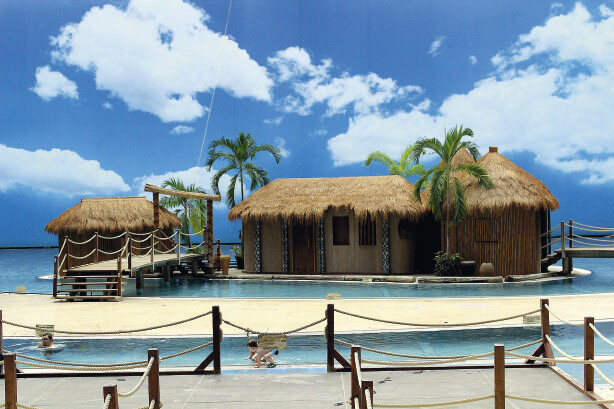
Weimar confronted me with the fullest introspection and at the same time allowed a deep expansion of my ideas. Frank was the most enriching partner I could ever have; always proposing plans, activities, meetings with other artists or agents of the art field. In four months I took German classes; I met Bauhaus Dessau authorities; I helped to organize a surprise birthday party in Paris; flew in a balloon in Tropical Islands; applied to a public art contest; showed my work to different artists in different cities; visited the Anna Amalia Library as many times as I could; traveled around Weimar and worked in the studio day after day...
ACC gave me confidence and strength to start a period of international residencies in the following years that would enrich my work in ways I could never have imagined. It helped me to achieve The Pollock-Krasner Foundation Grant and the Belle Alliance Residency in Lisbon. I was able to encourage myself to project an expansion of my work into space and into the field of theatre that even today, 8 years after that experience, I am still exploring.
Leila Tschopp, Argentina

Asked for my memories for the ACC Studio Program „Beyond Desire“ 2010 in Weimar I think of these keywords first: commitment, support, motivation and humour. As an established cultural institution in Weimar with an extraordinary origin story (a former squatting of an abandoned house) the ACC Gallery contributes crucially to a contemporary art discourse – a discourse that always leans on or contrasts the historical, political and cultural heritage of the city of Weimar. In my personal experience the residency program depends on the personal effort and dedication of the ACC-Team. As an artist who planned a public installation the hands-on support concerning its realisation was an extraordinary experience! The positive experience proved to be true again – half a year later – during realising the residents’ exhibition. It would be desirable if this motivating feeling of “everything is possible” was as present in other institutions as well. If nothing else, I believe that the ACC residency ´nine years ago matured my own view of my work, with a sense of humour and irony: two crucial ingredients for an artist’s biography…
Christoph Ziegler, Germany

The best thing about our artist residence in Weimar was Frank Motz and his indestructible passion for art, the gallery and hosting his artists. The worst thing was an infestation of ants at our studio, so not that bad really.
10 years on and we would love to go on another artist residence, however, we have built such an empire since then that a stipend wont be able to pay for our own studio overheads and we can’t live without laser cutters, a vast stock of equipment, tools and our team of creatives anymore. (Also, Brexit probably means we wont be able to leave the country anymore anyhow.)
We came to Weimar at the start of our careers and it gave us the time and space to experiment and find out what floats our boat. The team at the gallery really helped us out with that - Raymond made us a big black box to put people in whilst everyone mucked in to stick up thousands of postcards onto the gallery walls.
Thinking back to Weimar feels like an out of character experience for the McGuires because we have never since or before made anything as conceptual as we did when Frank was around :)
Davy und Kristin McGuire, Great Britain

Dear Weimar,
It’s been too long since we have seen each other. I will never forget how I met you. If I am honest I did not know so much about you before I got to know you, but I fell in love with you in seconds.

From the moment you picked me up at the train station you turned the following couple of months into a firework of possibilities and ideas. Everything was set on fast-forward but at the same time we had a calm and quiet relationship. It’s your nature of elements, individuals and the concentration of rare atoms, particularly around Burgplatz, that makes you special.
I carried around some big ideas way too long. Turning starlight into fire, expanding deeper into the cosmos and questioning the New are just a few of the lights that got sparked by you.
 I arrived as a curious researcher and left as an independent space explorer thanks to your genius loci and the freedom of undefined time.
A lot of important decisions were made and new directions were taken from here.
You are always a milestone in my work and a key to the unexpected. 
 As one of the remaining places of real solitude you are more valuable than ever.
It’s hard to believe, it’s been already ten years since we first met.
 Even if we see each other less than I would love too, every time I return, you feel like home.
Yours,
Hagen Betzwieser, Germany

My residency at ACC Weimar coincided with my 'emerging artist' period. I am grateful to Frank Motz who trusted me and helped me to realize them -including burning a bride costume accidently for my video where I've tried to reenact funny accident videos. It was the first time I had the chance to work within a budget and carte blanche too. I had my first solo show in Istanbul in 2010 where I showed some works I created during my residency. This exhibition lead me through local and international community and opened 'established artist' phase for me.
Asli Cavusoglu, Turkey

By the time I first spoke to Frank, I already had a few residencies under my belt so thought I had fixed opinions about the experience. However, my first conversation with Frank made me reevaluate these notions, making me realise the true nature and purpose of a residency, and how important it was to immerse oneself in the city and environment that the residency was taking place in. The true meaning of an 'Artist-in-Residence' was just as much about living and experiencing this city, as it was about the art. The format of living here for 4 months, then returning to my own city and coming back the following year for a show was a novel concept, and emphasized that a residency was not simply a place to shut oneself in a room and produce art, without considering and assimilating into the surroundings of the city.
This lesson is one I take with myself, thanks to my time here.
Muhammad Zeeshan, Pakistan

I spent 4 months in the international residency program of the ACC Gallery and the municipal of Weimar during the summer of 2007. This stay was one of the most significant and influenced my creations. It was inspiring, interesting, fascinating and fun. During the stay I was working on the theme of artificial ruins and local tourism, and developed a video that was based on a puppets performance at the Ilmpark. For this project i got many opportunities of research: tours in parks and castles, meeting with scholars and a lot of archival information. For me this was one of the most fun adventure development an artwork. for the production I got all i needed, and for me it was amazing to see how all the staff of the ACC taking part in this and collaborating.
In addition to my personal project I had the opportunities to join a group of artists for a one week workshop and learning in Osmannstadt, as well Bauhaus seminar in the framework of a summer school, visits in Buchenwald, Naumburg, Leipzig, Dresden, Erfurt, Dessau and Berlin. My interest in artificial ruins and gardens received many inspiration from parks such Belvedere, Tiefort and Ilm, in the city of Weimar, as well as castles and gardens in the countryside of Thuringia. But the most fruitful project that leaded to many other later was the UZI project, which was first exhibited in Tel Aviv in 2010.
Yochai Avrahami, Israel

Sing lyrics with teenagers, have “Kaffee und Kuchen” with seniors, learn about local plants and herbs from an ACC staff member, plan adventures with a bright and savvy ACC intern, collaborate with other artists who found their way to Weimar, and get interviewed by a PhD student by accident—your intention was for the student to be the interviewee! Walk around with knowledgeable tour guides even if you don’t share a language in common—there is always body language. Speaking of the body, if you are American, slow down. There is no rush in Weimar. Meander through the park, watch the flowers bloom, sit on the grass, bask in the sun and day dream, spend a day in the library reading about another library down the street. Enjoy a tasty kirsch yogurt, then burn off the calories with a jog between interlinking sculpture parks. Listen to the Bach CD gift set that a cultural officer gave you. Become engrossed with the lost and found listings in the newspaper, and look out for the spring bulk garbage schedule. You can find most of your art materials there. If the occasion strikes, run your own ad in the newspaper. ACC will help you with this. Go to everything. Go to the bakery. It’s customary for a dinner guest to bring cake. Go to art events around the city, and a year later meet the curator of the exhibition half-way around the world by coincidence.
Everyone passes through Weimar. Go to talks at ACC by critics, writers and visiting artists, and meet the Bauhaus international graduate students and faculty who are friendly and excellent resources. Grab an espresso in the Bauhaus student centre. Go to Leipzig to visit the galleries and participate by chance in a Critical Art Ensemble demonstration and march. Go to the wax museum in Weimar, the one that depicts the Dark Ages. Go to Buchenwald. Don’t go to Erfurt (kidding!) Your stipend can be used for travelling, materials, ordering pizza for town hall meetings… It’s up to you.
The residency can be as social or private as you’d like. The apartment is located in a quiet artist studio building with shopping not too far away. Go to the co-op for local produce and a delicious cup of soup. Walk through a beautiful historic cemetery which is well-maintained by gardeners. Return to Weimar for your residency exhibition and compare your experience with the other residents. Anything is possible at ACC! Your work is supported by an exhibition budget. The space provided to each artist is comparable to having a solo exhibition, and there is still enough space for an impromptu collaboration between the residency artists. You propose to attach fabric banners to the outside of the building and ACC’s team engineers this. A custom framer fabricates a gorgeous light box for your photographic print. Your transcripts from a courtroom intervention are translated into German. The residency exhibition is advertised, promoted, and professionally documented, and your work is shipped back to you to present in future exhibitions!
Beyond the unparalleled tangible support that you receive from ACC and the City of Weimar, you will find what is rare today—uninterrupted time for reflection, humility, and rumination on big philosophical questions. You will find little solace in Weimar, a small city with a history writhe with the best and worst that humanity is capable of. Your time in Weimar will be precious, challenging and potent. It may take a full year to unpack your experience. This is a residency where you can ask yourself hard questions, read books, experiment with new ideas, and encounter pitfalls, while you seek loopholes for agency and self-expression within paradigms and systems, as large as the law and as small as your daily routine.
Kristin Lucas, USA

My time in Weimar was in many ways extraordinary. It was a hot and beautiful summer. It was also an insect summer, I had ants creeping out of my pillow the first night, flying ants in the bathroom and huge spiders and other insects in the studio all through my stay. I used a lot of bug-spray in Weimar. I enjoyed working in the studio. The graveyard opposite the Atelierhaus and the lack of internet gave me a feeling of visiting a different age. I don’t know exactly what age it felt like, just not the age I was used to. In general (and due to many factors not only to being in Weimar) I felt like a complete alien and I looked at the tourist attractions in and around the city in that state of mind. The result is a film called “The Weimar Conspiracy” (13 min, 2007). I am quite fond of it and it is still screened from time to time. I also finished the publication “Encounter - Gentlemen & Arseholes” during my stay. At the day of the open studio, a local artist told me that what I do is not art, another visitor said I could very well be a genius. A kid painted a portrait of me that is absolutely hilarious. A couple of people whom I encountered in Weimar later became close friends. A very special summer it was.
Lene Berg, Sweden

Dear colleagues,
Weimar is not an artists‘ town like New York, London or Paris. Cities, that unspokenly promise the long-longed-for breakthrough and a comfortable spot in the art market. We all know the staff of a contemporary artist novel. The artists who has an enlightening task, like Dante once described. What‘s more is the desirous gallery owner, the fellow students and artists, who are always also the competition. Not without reason all of us residents were asked whether this scholarship has helped us getting an exhibitiom or even another scholarship, because residencys also play an important part in that novel. Weimar might not be New York, London or Paris. But it has a much more interesting history, that I can recommend to every resident. Because only a few kilometres seperate the town of poets and thinkers from the former concentration camp on the nearby Ettersberg. The cruel counter-image to the city of classics. Personally that‘s why I was so impressed by that place. Before I end this short letter I would like to emphasize what a privilege it is to be on residence. A privilege to get to know another town, other people and to have the peace to do whatever you please – without the claim to play a major role in the artist novel. My heartfelt thanks therefor goes to the city of Weimar and to Frank Motz and his team. Dear Frank, sadly I have to disappoint you in a way. Shortly after my residence I gave up on art and became a journalist.
Claudia Hardi, Switzerland

I was in Weimar for just four months over 12 years ago. Reflecting on this short period I am struck by an enduring sense of things being possible. While a concentrated period of artistic development was facilitated by the fantastic studio space and generous financial support, it was the energy and enthusiasm of the ACC gallery team that produced such an enduring sense of creative possibility. During my time at ACC I pushed my practice into a new direction, Frank Motz not even blinking when I proposed a project that required significant restructuring of the gallery space. My experience at ACC demonstrated to me the importance of embodying and transferring a sense of enthusiasm and possibility in the creation of art. This is something that I strive to bring to my teaching work at universities; it is not just buildings, technical facilities, knowledge and finance but genuine human enthusiasm and support that is crucial in generating a place, a time, a feeling that art is possible.
Patrick Ward, Great Britain

Weimar felt like being at home. Walking down to the ACC café and hearing a beautiful melody from music school was wonderful. The combination idealistic beauty and madness was fascinating. The work was fantastic, I visited so many people in Germany and beyond. Everybody was helping me! The stipend was great and had good space. The stay in Weimar useful for my life, it was almost the first time to talk properly to people in my age with experience of the value system changed completely. Since the time in Weimar I started to take pictures by myself and I have been having shows after I left.
Kyoko Ebata, Japan

The residency at the ACC Gallery in Weimar was my first ever residency. As a matter of fact, I don‘t know if I would be working as an artist today had I not gotten that scholarship back then. Following my studies in art education the scholarship gave me courage and confidence to pursue an artistic career. For that I am very grateful to the ACC and also to Michael Arzt, who showed me the call for entries. I did not become rich or famous, but it was a good starting point for more exhibitions and scholarships. I had my little daughter with me in the Studio Building (the second oldest in Germany, as I was frequently assured). Both of us very well remember the fire bugs on the trees at the graveyard next door and the disgusting slugs between the nursing home and the studio building, which is a very weird triangle, I thought back then: nursing home – studio building – graveyard.
The team of the ACC Gallery supported me a lot and the residents of Weimar were very open and numerously contributed to my art projects or participated in events. I felt very well in the town and at the ACC. It was a special experience, and I look back on it a bit wistfully. I think, I have to go to Weimar again some time…
Mandy Gehrt, Germany

During my stay in Weimar 2004, I found the staff of ACC extremely helpful to me while I was working on a large-scale photographic work for EXPO 2005 in Aichi, Japan. For the group exhibition "Irony is dead - long live irony!" I also produced two other smaller installations, so I can say my time in ACC was very fruitful. ACC studio program accommodates only a few artists simultaneously, but the friendliness of the ACC team in the café-restaurant as well as the gallery, provides a diverse and interesting social network. Also the individual residents of Weimar and the staff of the cultural management the city helped me to enrich and improve my artistic process through their participation, both technically and thematically.
Tea Mäkipää, Finland

When I arrived in Weimar it was winter, the sunset was around 16 hours and I used to live in an empty old mansion in front of a cemetery without internet and no electric light in the street.
Like Nicole Kidman in “The others” closing the curtains when the sun was setting I remember I spent 500 euros in telephone bills as the only communication device I had was a tele-fax machine.
I was so isolated that suddenly I started to reed more and more and watch films compulsively, I think I never read or watch so many books and films ever since.
The project I went to do, the grant “Be a Latin American Artist” was very successful, and a few months after three Bauhaus students went to Uruguay to learn how to work and live with 100 dollars per months.
I remember this residency as a highly creative time where the impossible became possible and for that reason I suggest you to get inside a house right now, close the curtains, turn off Internet and wait reeding for the sun to come out.
Martin Sastre, Uruguay

I left my hometown Weimar when I was 16 and having lived for quite some time outside Germany, I was rather nervous about the return. Especially with a project that meant spending lots of time with people on the streets, convincing them to sing me a song in front of a camera unprepared, and from memory. Was it easy? Nope. Did anybody do it? Hardly, at first. Did the ACC team help? Yes, they sang (some with more gusto than others)! Did I get better at convincing people? Certainly. Did I have any idea I would be continuing with this project for 10 years? Hell, no!
Looking back, Weimar was by far the hardest place for recording songs of amateur singers for the Song Archive Project. I collected the first 120 songs there from nearly 1000 to follow in other countries. The Weimarer (dare I say Germans) struggled singing and many told me, they only do something if they can do it well. In Dublin they sang just for the craic, in Nashville for fame and in Iran to protest but in Germany I had to be a lot more inventive to lure people into action. When we finally all came together in the “Weimarer Handtuch” and a bunch of musicians improvised from singing prompts on beermats and paper flags, the whole pub erupted in songs and it was hard to stop the banter at the end of the night. What did I learn? Never believe stereotypes – it’s just a matter of how to tweak the game!
Yvonne Buchheim, Germany/Ireland

The peace of the studio and the social life at the ACC were important contrasts for me. It was a great advantage to be able to choose just what I needed and when. There was no problem working and exhibiting professionally, because the way of life in the ACC always guaranteed a listening ear, competence and high standards. An experience to remember!
Stephan Weitzel, Germany

I was in Weimar in 2002, which now seems a long time ago. Bringing reminisces of that time, I was at the verge of new work, new ideas. Weimar – the artist in residence program – gave me the solitude, and that was the most positive and by far the most negative experience that I had to endure. I was surprised by the art studio itself, the atmosphere it gave was a unique one. There was also an opportunity to meet new people, primarily from the universities of Jena and Leipzig, and that provided some positive push. In Weimer, La Rete association also had some positive impact on me. Julia Draganovic from La Rete was a great support as well as were the people from Weimer Municipality. They brought me all the necessities. There were no dishes in the apartment, nor music, internet or any other device that would make you feel at home and free to work on new paintings. With this and the tenderness they gave me, I felt welcomed. My experience in Weimar gave me an introspective look into who I am, and into the way I want to work. I presume that the solitude can give you this advantage: you observe your inner self calmly. At the time, when I was present in Weimar, I haven’t felt the ACC taking any interest in promoting the artist in studio residence, nor have I received any calls from my future contacts based on my time in Weimar. But studio residence in Weimar gave me one valuable info on what not to do. In the following years, I did receive calls based on my previous CV, including exhibitions in Europe and USA, but no one ever referred to Weimar studio program, nor were they familiar with it. I find it odd that promotion of the artists by ACC was so very much vague. The only thing the ACC seemed to take to heart was providing place-studio for work and producing show in the Schiller Museum, followed by the „Übermensch“ catalogue. They failed to see that promoting the artist who gave art work to ACC and who spent some valuable time of their lives in the Studio was equally important for them as it is for the artist.
Biljana Djurdjevic, Yugoslavia

Some of my most beautiful memories are from Weimar.
Bjargey Ólafsdóttir, Iceland

My first ever residency was 2002 in Weimar! Today, 2019, some of my posters are hanging in an exhibition in Berlin – posters that I created during the residency with great support. Next to the posters I also created the video „Suitwatcher´s Anonymous“ and painted over photographs. The ACC team organised the printing, I cut the video at the Bauhaus University and there was an exhibition at the ACC Gallery. Start of April 2019 I just came back from Rome and my residency at Villa Massimo in Olevano Romano – Julia Draganovic wrote me on facebook that she will be the new directress of Villa Massimo. Coincidences! Because 2002 she was in Weimar running the studio program. Frank Motz was in New York. Did he have a scholarship?! Accompanying the exhibition at the ACC Gallery a catalogue was published: „Übermenschen“. The works, especially the video, continued to exhibitions in Italy, after that to Berlin, Amsterdam, New York, London, Hong Kong and so on. Yesterday my new ctalogue came from the printery. In this Adriano Sack describes one of the motives from the posters: „Erik Schmidt sits on a carpet floor and in front of a sofa, everything is completely covered with plastic sheeting. That could indicate a sex party, or an upcoming renovation. For both of these things a neatly tied left shoe is not mandatory.“ Everything once has a beginning, but not yet an ending.
Erik Schmidt, Germany

I find myself constantly remembering you and your beautiful city. About my experience there, I can tell you that the time I spent in Weimar was great – I worked a lot, maybe more than I had expected, and perhaps I missed a few things in the city. I remember the light of the place, the house, the cemetery…and of course Julia. I was very happy there, although my visit coincided with 9-11 and – being so far from home – I felt sort of scared and worried about the end of the world, anthrax and terrorism. I think if I had had more resources, that would have made it possible to stay longer in Weimar, but I'm happy now to have invested those resources into producing a consistent body of work. I would like to come back some day, because while I was there I was able to go deeper into my research and had the chance to develop my work. Definitively, my experience at Weimar was very pleasant and important to my subsequent work.
Irim Lux, Spain

No residency program I have participated in since has quite cured me of the after effects of the period I spent in Weimar under the auspices of ACC Gallery. Then as now, ACC and Weimar, are the place to be, as an artist, if you want to encounter the difficulty and complexity of contemporary Germany, its nostalgia for a democracy that never quite happened. Even now in 2019, it is gripped again, like a failed marital promise, engulfed by the centrifugal forces between competing militarisms and the obliging oligarchs on either side of the Atlantic ocean and the Ural mountains. Weimar remains a sensitive point, a blind spot…even, on the retina of globalisation; both a real and a false museum, a zone of tranquillity and sometimes, indifference.
The ACC program represents where Art must come into its own, for its own sake; as a beacon of hope to me and I imagine, to the many other artists who were hosted by the gallery over the years.
Ian Joyce, Ireland

Leaving my studio walls in Athens to come to Weimar was a bit like trying to kick depression by pathologically boring myself. I can still see Frank Motz trawling through the most funds-deprived art historical graveyard (Thueringen) and digging up the most fun-addled corpses (Wieland, Nietzsche...) for my inspiration. And he succeeded. Because like so many ambitious mischief makers (artists), I developed excessive multi-tasking which resulted in a video soap opera, "Dirty Soap", and a photo-novella of eight-hundred shots, "The Story of Agathon." After my residency at the European Studio Program, I can easily check voicemail with one hand and eat "pommes" balanced on the gear shift with the other, while simultaneously merging across three lanes of autobahn traffic to take an interesting picture. So, future artist-in-residence, don't be afraid of Weimar. Just dive in and surrender.
Dimitrios Antonitsis, Greece

Performance Collage: Bauhaus Performance 1999 was a major work conceived and realised at my stay at ACC: A film collage of urban planning in the Third Reich and its connections to the Bauhaus in Weimar and Dessau. The Haus am Horn, the Halle der Volksgemeinschaft, and Oskar Schlemmer’s frescoes in the Van de Velde Bauhaus building are intercut with less well-known “monuments” such as Nazi-era administrative buildings or garden fence posts originally used at Buchenwald concentration camp. Projected onto the wall, then recording myself perform infront of, and together with the moving pictures in a sequined dress. As fictitious performance without an audience, the resulting video was then projected back onto the ACC wall. Each shot in this documentation incorporates the flow of related news texts and quotes from Bauhaus masters based on extensive research.The soundtrack suggests a link to postwar Californian model homes, featuring ‘60s psychedelia, ‘70s Krautrock and ‘90s British electronic.
Bettina Allamoda, Germany

For the ACC I can say that it was a really hard time for me and for my work. I work mostly site specific and try to get in contact with local people where I live, but this was very hard in Weimar. The people involved in the ACC Gallery were open, but the people in the city were not so open – I think because of the social structure that changed so many times, the history and the story before and after the wall. So many changes made people tired. Maybe they try to focus more on themselves. They are a bit scared by any new situation. The studio place was also isolated, it was in the centre but it was hard to find other artists around. And you did not meet often with the local people because it was in a street next to the nursing home and a cemetery. I think this makes it isolated, too. The city itself is problematic, too. I think there is too much history and it is really hard to move with this history you feel on your shoulder. I think if you are working as an artist in the studio it may be more easy, but if you work in social contexts it is interesting but also very hard to get in the society.
Esra Ersen, Turkey

Diese Seite teilen